
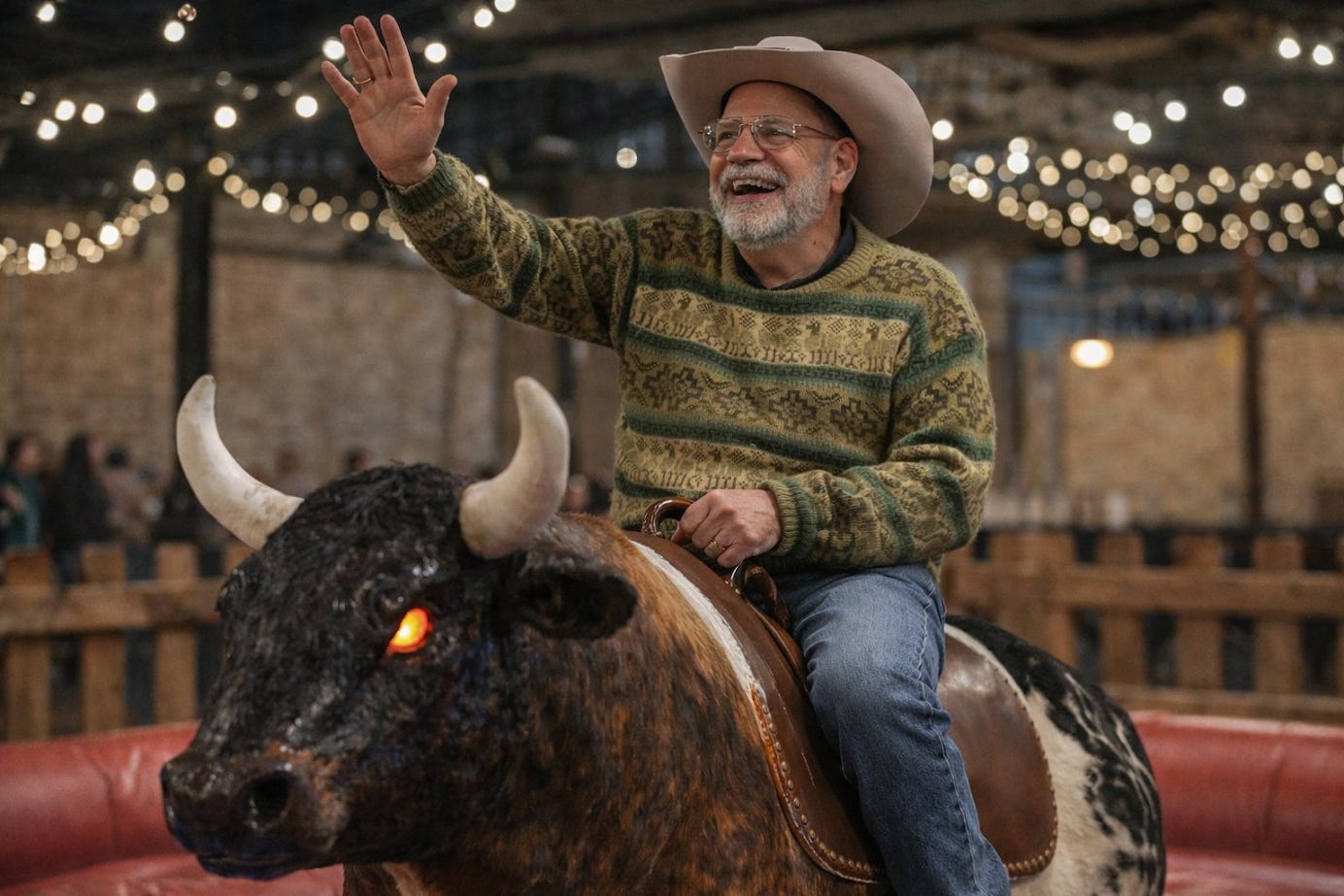
Welcome back to the Model Convo series — micro interviews with researchers in AI governance and related fields. If you know someone I should interview — maybe that’s you? — please email me. This week’s convo is with Tyler Cowen, who writes at marginalrevolution.com, as well as here on Substack.
What was your path into AI, and what are you working on now?
I first became interested in AI when I saw the chess computer Tinker Belle wheeled into a New Jersey chess tournament in I think 1975. I followed the Kasparov matches closely, and the more general progress of AI in chess. I read chess master David Levy telling me that chess was far too intuitive for computers ever to do well. He was wrong, and then I realized that AI could be intuitive and creative too. That was a long time ago.
In 2013 I published a book on the future of AI called Average is Over. I feel it has predicted our current time very accurately. I also taught Asimov’s I, Robot – a work far ahead of its time – for twenty years.
Right now I am simply working to keep afloat and to stay abreast of recent AI developments. I blog and write columns on the topic frequently, and have regular visits to the major labs. I encourage universities to experiment with AI education.

What works of art have most shaped your views on AI?
I know pretty much all of the main AI-related movies, but I cannot say they have influenced me, as much as I have enjoyed them. If anything, they are a precautionary tale against lunging at very definite conclusions. Iain Banks has a relatively sensible treatment of AI in his Culture series, but in terms of influence, and seeing potential problems, it is really Asimov far in the lead.
What’s your most contrarian take on AI?
Do I have one any more? Andrej and Ilya have come around to the notion of slow take-off, formerly considered a weird or radical position, at least in the AI community. I think for the most part that people either significantly underrate or overrate AI potential, and I am somewhere in the middle.
What are you reading, watching, or listening to now?
Most of all, playing around with the top AI models. Buying new recordings of classical music. Reading on the history of South Africa, and for the first time reading Steinbeck’s East of Eden. Reading Twitter.
Go-to emerging tech music track?
What counts as tech music these days? AI music is promising but not yet as good as what humans create at their best. Can I count William Byrd Renaissance choral music as “tech”? I think so. To that I will add McCartney’s “Temporary Secretary” from the 1980s.