

This week’s convo is with Kristen Collins, a Senior Fellow at the F.A. Hayek Program for Advanced Study in Philosophy, Politics, and Economics at the Mercatus Center at George Mason University.
She hosts the Virtual Sentiments podcast and blogs at Theory of Virtual Sentiments on Substack. She is currently working on her first book manuscript, Seeing and Being Seen: Spectatorship and Surveillance in Liberal Democracies. This project combines the history of modern political thought and contemporary democratic theory to criticize public and private forms of surveillance and defend privacy as both personal liberty and democratic value.
Kristen earned her PhD in political theory from Georgetown University’s Department of Government and is an alumna of the Adam Smith Fellowship at the Mercatus Center.
How did you get into emerging tech policy?
In the early years of my PhD (around 2014-2017), I knew I wanted to leverage my existing skills, passion, and knowledge of photography, documentary film production, and media studies. But I was also an avid listener of the tech podcast, Reply All, so as I was going through school, I was struck by how little of what the podcast covered about digital political economy was reflected in mainstream political theory.
So, I began with the notion of “audience democracy” used by theorists like Bernard Manin, Jeffrey Edward Green, and Nadia Urbinati, which treated representative politics as a kind of theatrical relationship whereby voters act primarily as spectators watching electoral candidates vie for power.
I thought this theory needed to be updated to reflect how central the internet and social media platforms had become to democratic politics. Because of the importance of digital advertising to the online economy, people are not only spectators but also surveilled by each other, private companies, and state authorities.
Indeed, experiences of surveillance are partly to blame for why some people tend to passively watch rather than get involved in democratic self-governance in the first place. That was the focus of my dissertation, which was the beginning of my first book manuscript.
What work of art has most shaped your views on emerging tech?
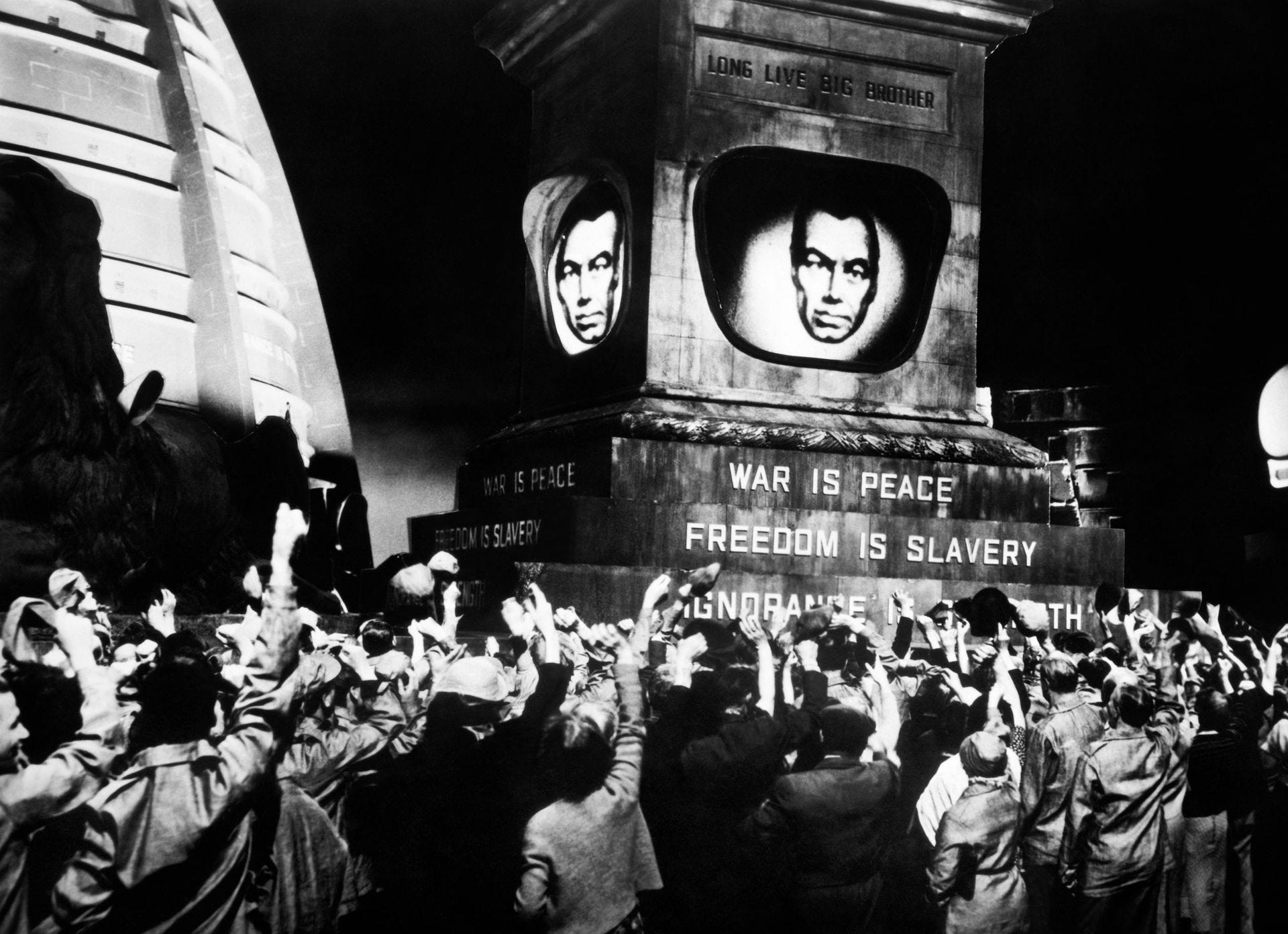
I hate how cliché this is, but I should be honest and admit it’s George Orwell’s 1984. I chose 1984 for my independent reading in seventh grade after my teacher assigned us Animal Farm. I didn’t know it then, but it was probably my first encounter with “political theory.” I was blown away by the power of science fiction to analyze and critique political and economic systems through interpersonal drama among characters.
I’m sure growing up Catholic had the biggest influence on my interest in surveillance (kidding!), but the novel is a close second. The “telescreen” as a tool for simultaneously “seeing and being seen” somewhat presages the modern internet and social media platforms, though, obviously, there are important differences between 1984’s totalitarian regime and the entanglement of state authorities and private companies that constitute today’s digital surveillance systems. I haven’t reread it in ages, so I don’t cite it in my book, but maybe I should!
What’s your most contrarian take on emerging tech policy?
When technological change is happening quickly, it’s all the more reason to take a big-picture view and approach questions from an institutional perspective, rather than reacting to the latest hot take or cultural commentary day after day.
What are you reading, watching, and listening to now?
I’ve been reading Mary Beard’s SPQR: A History of Ancient Rome. I’m reading it for fun, but I’d love to do more work on the reception of Ancient Rome in modern political thought. I’m fascinated by the disjuncture between past images of Rome, derived mostly from historians like Livy and Plutarch —— images that had a hold on people in the past and even some people today —— and the newer images we can develop today, thanks to the recent archaeological evidence used by historians like Beard.
I’m currently watching season two of Nathan Fielder’s The Rehearsal. I always have mixed feelings about reality television, in terms of how someone like Fielder treats their subjects, but I love the idea of exploring the very relatable desire to rehearse and prepare for the challenges of real life. The episode “Pilot’s Code,” nominated for a few Emmys, was brilliant comedy.
Since I’m a big movie person, I also recently watched Robert Eggers’s The Lighthouse and rewatched Hayao Miyazaki’s Kiki’s Delivery Service. Two very different movies, one disturbing and dark, and the other warm and fuzzy, but both are five stars in my book.
I’m a very season-oriented person, so in terms of music I’m listening to, I’ll highlight the artists whose latest albums I have on rotation for summer vibes specifically: Lewis OfMan, Fcukers, Slayyyter, Grace Ives, and, of course, Robyn. I’m a big Charli XCX fan and would love for “Rock Music” to be a sign her new music will draw from the genre-bending style Finn Keane and A.G. Cook explored under Thy Slaughter. I was disappointed by the Wuthering Heights movie but obsessed with Charli’s soundtrack album.
Go-to emerging tech music track?
”Immaterial” by SOPHIE. Donna Haraway’s “A Cyborg Manifesto” in a highly danceable 4 minutes.
One of the challenges of living in a free, modern society is having the emotional and intellectual fortitude to resist both naïve excitement and knee-jerk repulsion to novelty.
Whenever I find myself despairing about how much digital technologies have become wrapped up with surveillance or other forms of domination, I remind myself of Haraway, SOPHIE, and others who have articulated visions of how technological change serves emancipation, autonomy, and community if we work together to make that happen.
This interview has been edited for length and clarity with hyperlinks added. It reflects only the views of its subject.