
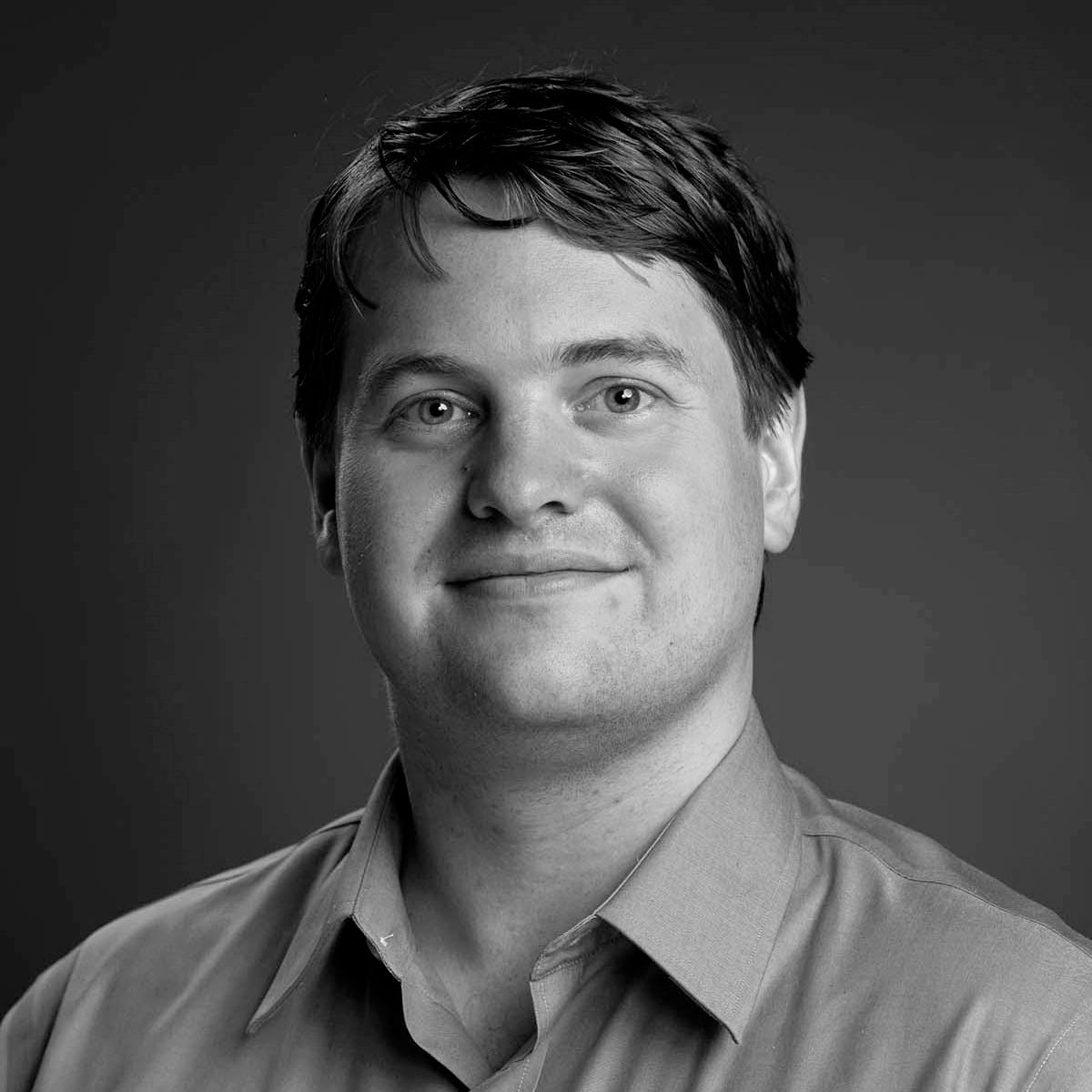
This week’s convo is with Keller Scholl, a policy analyst and forecaster studying law, policy, and technology at the RAND Corporation. He recently acquired a PhD in policy analysis at the RAND School of Public Policy. He writes on Substack at Neon Dawn.
What was your path into AI, and what are you working on now?
After I finished undergrad in 2013, I worked for Robin Hanson as a research assistant. I was lucky enough to be counted among the Carow Hall crowd and go to lunch with him, often the crew, plus whatever guests they might have. That was a fantastic education in its own right, and one I’m very thankful for.
One day it was just me and Robin having a chat, probably after pupusas, and we talked about my plans and ambitions. He made a very good point about how to have an impact on the world. There are things that are easy to change and things that are hard to change. Changing the latter has obvious problems, while changing the former means anything you change can be just as easily changed back. So, if you want to have long-run impact, find something that’s currently easy to change but will become hard to change.
That was true of AI in 2014, and I think it’s still true in 2026. The raw number of people in the field has expanded, massively, but we’re still trying to figure out what to do. Uniform opposition to all forms of regulation is doomed, and even if we manage to get a treaty between the US and China that restricts cutting-edge AI development to the two of them, there’s going to be disruption. So, everybody who doesn’t reject AI should take this seriously.
AI is an autocracy-enhancing technology. I wouldn’t hire my fresh-out-of-undergrad self without more mechanisms to benefit long-term from a future career path. If Congress doesn’t do something, I expect AI-driven unemployment to result in massive increases of disability rolls, which is one of the worst possible worlds if we continue to view dignity on disability as a problem. We still desperately need at least two AGI-pilled sociologists who aren’t working at a lab, because right now I’m fairly confident that the number is zero.
I also learned a fair bit from spending time with Mason students. I’d gone from private schools to Oxford and needed a reality check —— “Keller, most people don’t like thinking outside of class.” Too many analytic products assume the reader likes thinking. These readers like doing. You should produce a report that enables doing (1-2 pages) but also has an optional check-my-work component (20-500 pages) for the reader’s subordinates and critics.
So, dutiful Effective Altruist that I am, in possession of a framework to improve the world, I went out to execute get a PhD in the economics of artificial intelligence. The RAND PhD program is like a normal PhD program, only instead of being a research assistant or a teaching assistant, you’re working as a respected colleague on RAND reports, and instead of being dependent on one person for your funding and career ambitions, you write about what you’re interested in and pick from over 1,000 different possible supervisors. I had heard some nightmare stories about bad student-chair relationships, and wanted no part of that.
I learned from a wide range of projects while at RAND: why most published papers in engineering and science in America are in health/biomed, how to convince people to pay me, and how to get results when “the best answer available in budget and by the deadline” matters more than “something that’s theoretically intriguing and bulletproof.”
One of the blessings of being at RAND was that 75-plus years of history and an excellent reputation meant that we could tell the client what they needed to ask, not just what they wanted to ask. Most of the time. And while the questions were set by the client, I did not once see someone face any internal pressure to change an answer. I would trust a RAND report well over the median published paper in a top journal.
I ended up writing a dissertation on something I saw members of Congress prioritize over and over again: jobs. Most forecasts model AI labor displacement through task automation or disagree furiously about tasks versus jobs versus bundles. But rising productivity has slashed farming jobs from the center of the economy to a tiny percentage while producing a multi-decade run of employment in software engineering. The difference was demand. We got obese, we got spices, and we got more meat, but mostly we just spent a lower fraction of income on food. I wrote a dissertation on consumer demand. If you think that the world becomes a lot wealthier because of AI, those consumers won’t shop like a linear multiple of current spending. I’d like to write about industrial demand, but data isn’t available.
I defended my dissertation in March 2026 and am now looking for a full-time role while enjoying the chance to think about things other than revising my thesis. I gave a talk on AI and values as part of a series put on by my hometown church. I published a piece using oil futures to predict the cost of the American-Iranian War of 1904-1905 2026 for drivers. I’m working on a Substack post about how strategic thinking won’t change with AI except in the sense of the process being changed and then obsoleted. If it sounded reasonable in a sentence, I wouldn’t write an essay.
I also have percolating a policymaker-focused catalogue of models of AI’s supply impact on jobs: I think there’s an undersupply of researchers using AI to better present good analysis, so I’m trying to think of useful displays, dashboards, and similar presentations of data, because the cost of producing a decent one has never been lower, and so those of us who understand the underlying facts have a minor obligation to produce more.
What works of art have most shaped your views on AI?
I try not to think too much about AI through the frame of art. Eliezer [Yudkowsky] was right about many things. One of them is that people use works of art the same way they should use history —— a set of examples, mental models, and reference cases against which they can compare their present situation. I get frustrated enough when people compare AI to quantum computing, which at least has the virtue of existing.
Instead, go think about the printing press. Better yet, go skim what people were saying when the printing press was coming out, in as fully translated and unfiltered a form as you can. Then go look at the 1870-1970 farm to factory transformation, and all the politics it caused —— like the Great Migration and “White Flight,” (arguably) the decline of religion and strictness of sexual norms, and Prohibition-era backlash.
People underrate the plausibility of the future more closely resembling various historical oligarchies than our weirdly egalitarian past few centuries. I recommend reading up on politics before and after Savonarola. The Florentine reading is easy. Milan, Genoa, and particularly Naples should all get more attention than they do. But that’s a complaint for historians. The tech analyst interested in expanding their mental frame of reference in the Italian Renaissance should probably just study Florence. Admittedly, I say this being horribly behind on my readings in German and Dutch history of the period.
But to actually answer your question, I am an old-school rationalist, so I have to acknowledge the impact on my thinking of Luminosity and Radiance. I also use a lot of dance metaphors in my general thinking, because I’ve danced swing since high school. Thankfully, because LLMs are just “glorified magic 8-balls,” I’ve had a lot of time for dancing recently. Finally, “Politics and the English Language” shapes my views on people in AI all the time.
What’s your most contrarian take on AI?
I hope I won’t still think this in three years, but so far the most useful output of AI safety has been that most top AI researchers take safety seriously, often because they thought about it and decided to go into AI. Somewhere between “Sam Altman believes safety is important” and “Sam Altman is meaningfully constrained by employees and investors who believe that safety is important, and intermittently screws up badly enough that a bunch of them leave to found a new company with a better safety plan” lies almost all of the positive impact to date. To the extent that policy interventions have impact —— e.g., AI whistleblower protections or requiring companies to follow their published safety plans —— it’s because many who work in AI will whistleblow and complain if their company’s safety plan is not good.
What are you reading, watching, or listening to now?
My book club is reading How Africa Works by Joe Studwell, which (at least so far) is fantastic. We just finished Prisoner of the State: The Secret Journal of Premier Zhao Ziyang, which is a fascinating historical document, produced by someone who wants to make it very clear that it’s all Li Peng’s fault. It has the tragic attitude common among early 2000s Chinese documents, that democracy is good, inevitable, and needs to not be rushed. They’re aiming for Singapore or Japan, even if they could never say that. It’s also really interesting because it’s not Estonia. They’re not reading Milton Friedman and rapidly becoming converts. In the book, Zhao Ziyang goes to France and realizes the French choose crops based on what the land will support instead of launching a massive infrastructure project to change the land. It’s a slow move towards capitalism because every marginal step is good.
I also recently had the chance to rewatch RRR thanks to Eukaryote Writes. I’m told it’s very different if you understand Indian late colonial history well, but I will recommend it as a fantastic Tollywood action movie. I’m also reading Katrina Manson’s Project Maven. The book’s portrayal of Drew Cukor is one I’m very sympathetic to. Cukor comes off as a man with a long list of faces and deaths he knows exactly what to blame for.
Go-to emerging tech music track?
I’m married to a bard who does historical reenactment, so I think I have to go with “Not Yet Done,” a song about losing and fighting on. But if you ask me to pick a song that is more about emerging tech, “Somebody Will” is a song I heard at a now-defunct science fiction convention many years ago. It is a song about fighting for a world that you dream of, even if the suggested timelines now feel quaint. The songwriter is also a historian. I’ll toss in a plug for “Inventing the Renaissance.” Her thesis, that golden ages get invented by the people who need them, is one I think more people should appreciate.
This interview has been edited for length and clarity and reflects only the views of its subject.