
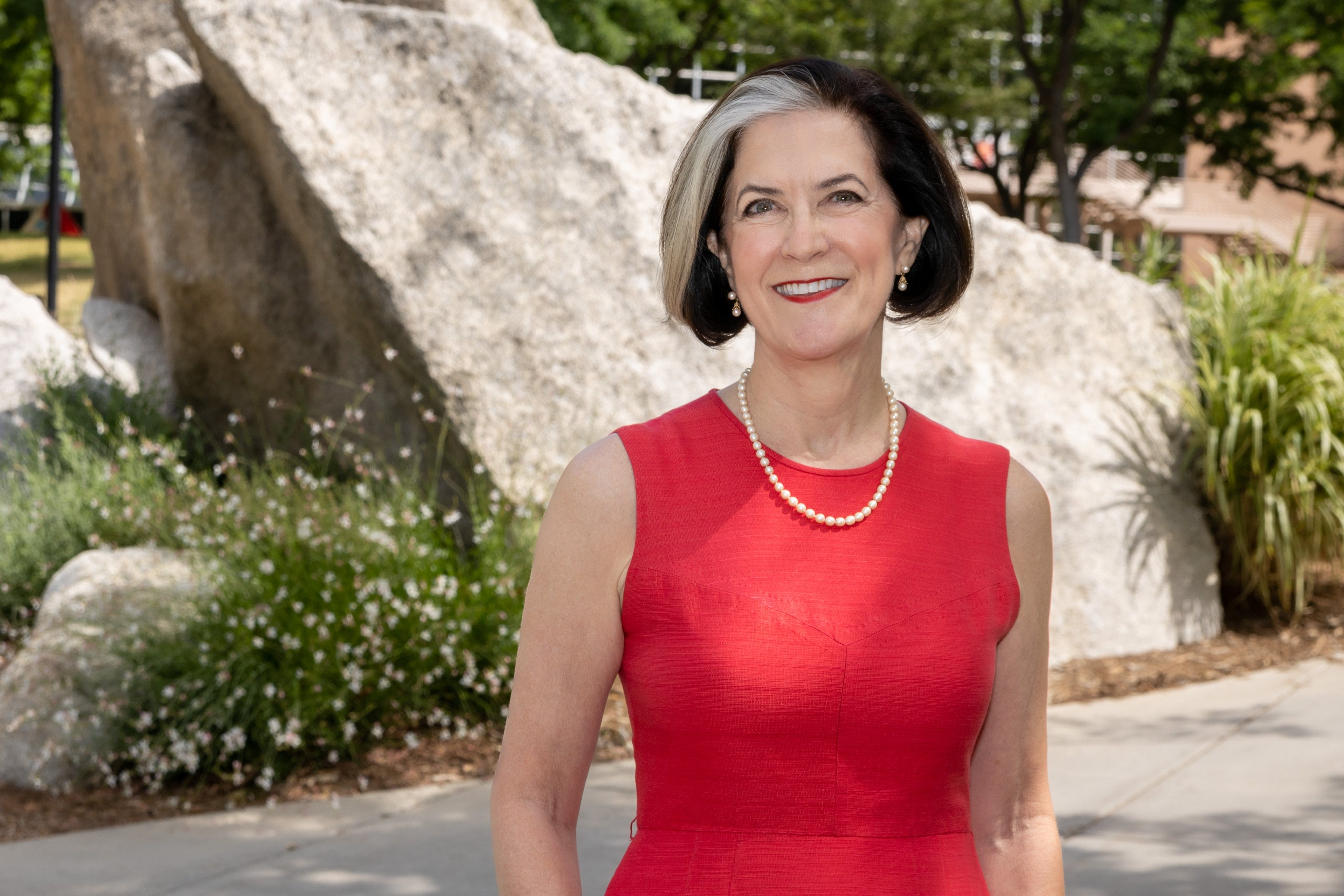
This week’s convo is with Hollis Robbins, Professor of English at the University of Utah. She writes about AI and education on her Substack, Anecdotal Value. You can also find her at x.com/anecdotal.
What was your path into AI, and what are you working on now?
All fictional characters are artificial intelligences. The best fictional characters are those you can imagine plucked from their fictional universe and put into a wholly different environment and there would be enough groundwork laid about vocabulary and personality that you could imagine them fully operational and remaining “themselves.” Sherlock Holmes is one. Scarlett O’Hara is another. Michael Corleone is a third. So I had a pretty high bar before I encountered AI in science fiction, like the computer that Captain Picard talks to in Start Trek: The Next Generation or HAL in 2001: A Space Odyssey.
In 2019 I found myself at a small dinner with Sam Altman (after a conversation with Tyler Cowen) and was intrigued by his vision for OpenAI. I asked for access to GPT-3 a few months later and in 2020 started doing experiments with some human poets and some AI engineers to try to understand what gives a chatbot “personality.” These were the days everyone was talking about GPT-3 writing poems “in the style of Tennyson” and that sort of thing. The poems produced were fine and could fool even me some of the time but they had no distinct personality. Remember that even the best poets write lots of mediocre poems, so this wasn’t about “good” or “bad” but personality. I spend lots of time writing and thinking about this.
Now I am working on ways that AI can improve higher education and how universities should think holistically about AI. Conversations about cheating should have ended in 2024, though they will continue as long as universities seek to balance their books on profitable online asynchronous programs. The real issue is understanding what AI does not yet know and cannot yet do. I have a book coming out next year about this.
I’m also helping writers improve their writing by pointing out bad AI habits.
_-_%27Twelfth_Night%27_by_William_Shakespeare,_Act_V,_Scene_1_(for_Boydell%27s_Shakespeare_Gallery)_-_14_-_Theatre_Royal,_Bath.jpg)
What works of art have most shaped your views on AI?
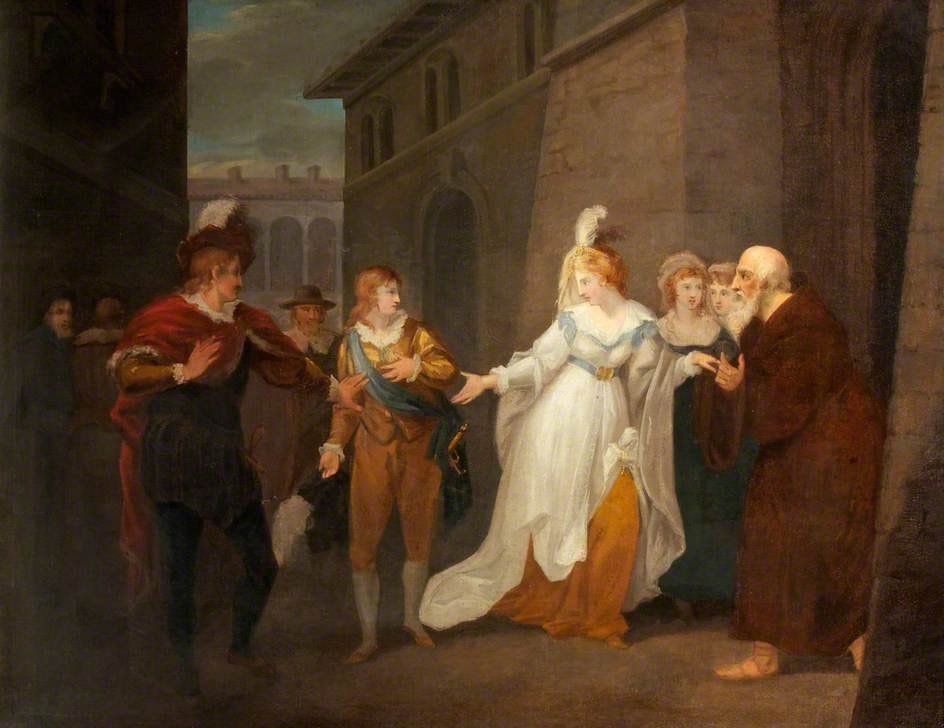
Two books: Shakespeare’s great play Twelfth Night, where identity is a matter of words alone. Characters read into words what they want to hear. Viola convinces Duke Orsino she is a page and he falls in love with her words. Poor Malvolio believes he has received a private note from his boss, Olivia, because he is already a little in love with her. Sebastian has no personality at all but Olivia asks to marry him anyway because she too has fallen in love with Viola’s words. If you’ve read your Shakespeare you are not at all surprised that people form attachments to words well addressed and seemingly personal.
Second, the Bible, by which I mean the Hebrew Bible. Clearly the writers of the Bible did not want God (which many observant Jews render “G-d”) to be represented fully. The Second Commandment prohibits images and representations. God speaks in mysterious ways (from a burning bush) and several times to women in cryptic and funny ways. God’s mystery and awesomeness are protected because he doesn’t say much and he does most things only once. He’s not sycophantic. The whole point of God is that he’s not a chatbot. So if you’re a Hebrew Bible reader you’re used to a certain kind of brusque and elliptical user interface with omniscience that renders AI pretty pedestrian, albeit useful.
What’s your most contrarian take on AI?
Two takes: First, I think AI will force people to have a theory of mind and a theory of knowledge. You should see the blank stares I get when I ask people even to define knowledge.
Second, AI that has nothing to do with “words” is the future, even though most people are obsessed with chatting with large language models. I was speaking to a doctor today who said that the ways that AI was improving health care were beyond his imagining. He was excited about the ways that AI technology will catch things that human doctors miss, will allow many more “eyes” on test results and scans and images, will fix referral systems, will prescribe medications better. People are justifiably worried about privacy but that’s because they’re thinking too much about chatbots and “knowing.”
What are you reading, watching, or listening to now?
If there is a literary genre in which I think AI may someday be competitive with human writers, it is the detective story. The plot is generally a crime, a person who is good at seeing things, and then putting the pieces together. The best detectives (like Sherlock Holmes) have distinct personalities and that’s what makes the reading fun, along with the fun plots. So I’ve been reading a lot of mystery stories (I particularly like Adrian McKinty) and watching cold-case series on TV. I also see what Tyler Cowen recommends because he has excellent taste.
I’m teaching a course this fall on what American literature is taught in Chinese universities, so I’m reading Mario Puzo’s The Godfather (1969), which the Chinese love, and love to see as a reflection of our national morals and values. Are they wrong? It is hard to say.
Go-to emerging tech music track?
I have no idea what that means. But when your note came this is what I was listening to. Original piece by the great Ennio Morricone and the singer-songwriter Elisa for Django Unchained. “Still here.”
This interview has been edited for length and clarity. It reflects only the views of its subject.