
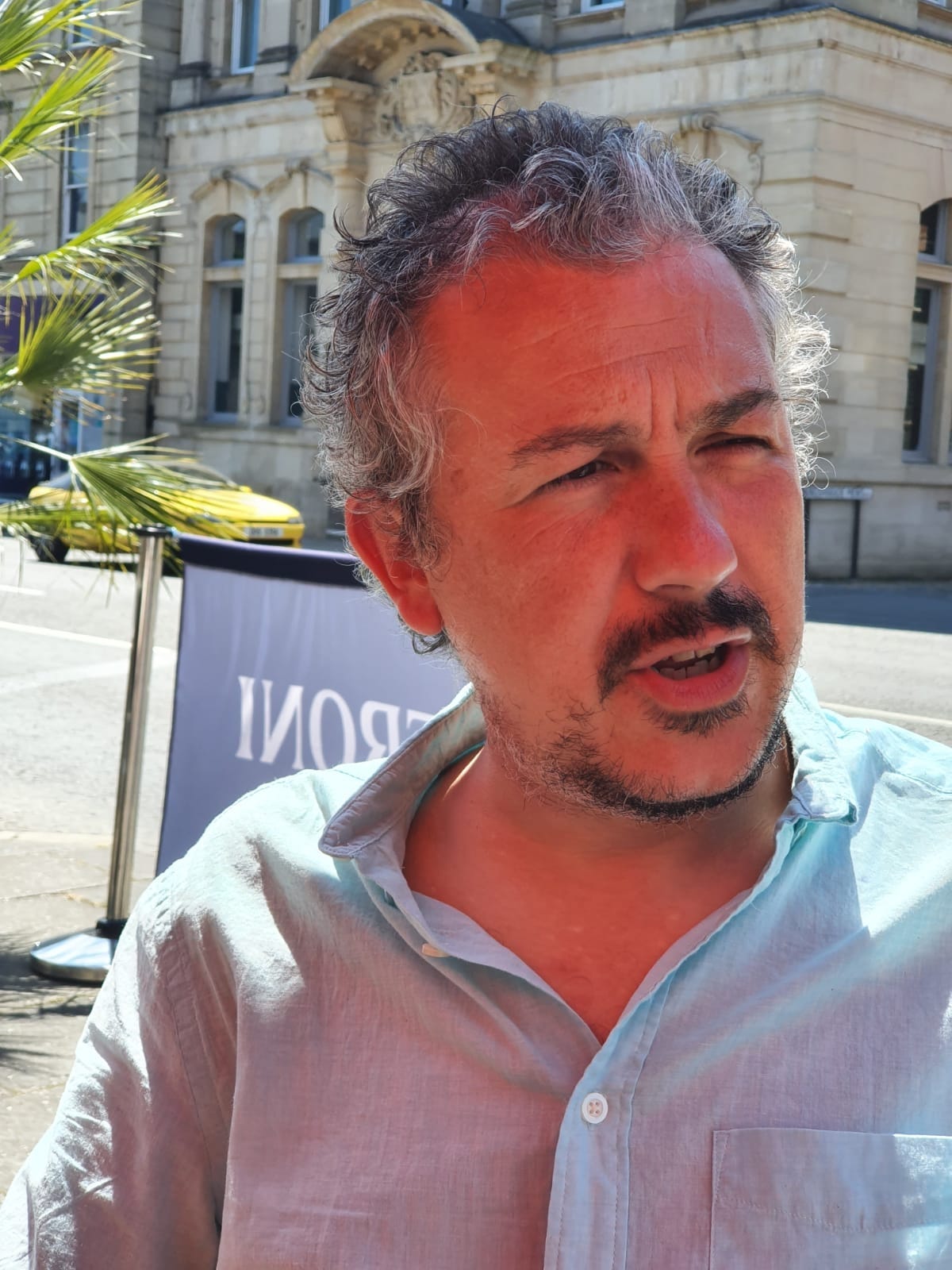
This week’s convo is with Alberto Acerbi, a sociologist at the University of Trento and member of the Centre for Computational Social Science and Human Dynamics.
He studies cultural evolution with a focus on the internet, algorithms, and social media, and recently authored a book on the subject, Technopanic. You can follow him on Substack and X.
What was your path into emerging tech? What are you working on now?
I wasn’t the classic geek as a teen. I studied philosophy and then moved to anthropology. Anthropology was a bit of a downer, as it was not what I had in mind. Looking at it retrospectively, I was imagining something like evolutionary psychology or cultural evolution, but I did not know they existed! It seems strange to say it now, but it was 25 years ago, and I was your average university student in Italy.
When I started the PhD, I ended up in a laboratory at the National Research Council in Rome. They were doing robotics and artificial life simulations. I saw papers like “Cultural Evolution in Neural Networks” or similar papers, and I was intrigued. So I wrote an email to the head of the lab. He put me in an office and said that I had to learn C++, which I did. Then everything started.
When I moved to cultural evolution proper, it was natural to do agent-based modeling and quantitative data analysis. Around 2015 I started to apply the cultural evolution framework to information dynamics on social media. At the time, there were of course computational studies of social media. But my impression is that many lacked a theoretical background in psychology or the social sciences. I thought cultural evolution could provide a good one.
Today I am continuing on this path. On one side, I use a broad evolutionary approach to study social media dynamics. One focus is the motivations behind our sharing and producing information online. Different social media —— and different communities within the same social media —— act like “niches” with different incentives. So broad generalizations on social media (like “social media favor negative content”) may not always be accurate.
On the other side, I am extending with other researchers the cultural evolution approach to the study of AI. This is a very exciting field. There are many open possibilities. I have used a transmission chain methodology —— a lab version of the telephone game —— to study AI agents. You have material and you ask an AI agent to transmit it to another and so on, and you can see how this material changes. There are many options here. You can have mixed chains of humans and machines, different models, and prompts for different goals, like asking the agent to make its transmission more attractive, informative, or original. I hope to do more in this direction!

What works of art have most shaped your views on emerging tech?
This is a difficult question. I never thought about it. Cheating a bit, I can think about books like The Blind Watchmaker by Richard Dawkins and Out of Control by Kevin Kelly, which I read during my PhD. They are not art, but they also were not part of my “research” reading either. The idea that order that looks to be designed can emerge from blind, bottom-up processes was influential for all I did after.
What’s your most contrarian take on emerging tech?
For sure it is that, together with a minority of researchers, we insisted that a lot of worries about social media, and especially misinformation, were misplaced or exaggerated. Just after I started to work on these topics, there was the first Trump election and the Brexit referendum. Everybody was talking about “fake news” that was “destroying democracy.”
My impression was that the research painted a different picture. It suggested misinformation was not that common, or it was mostly consumed by people already on the same side of a given piece of misinformation. My evolutionary background, especially influenced by the idea of epistemic vigilance, suggested we are not as gullible as generally believed. If anything, we are too stubborn when evaluating new ideas.
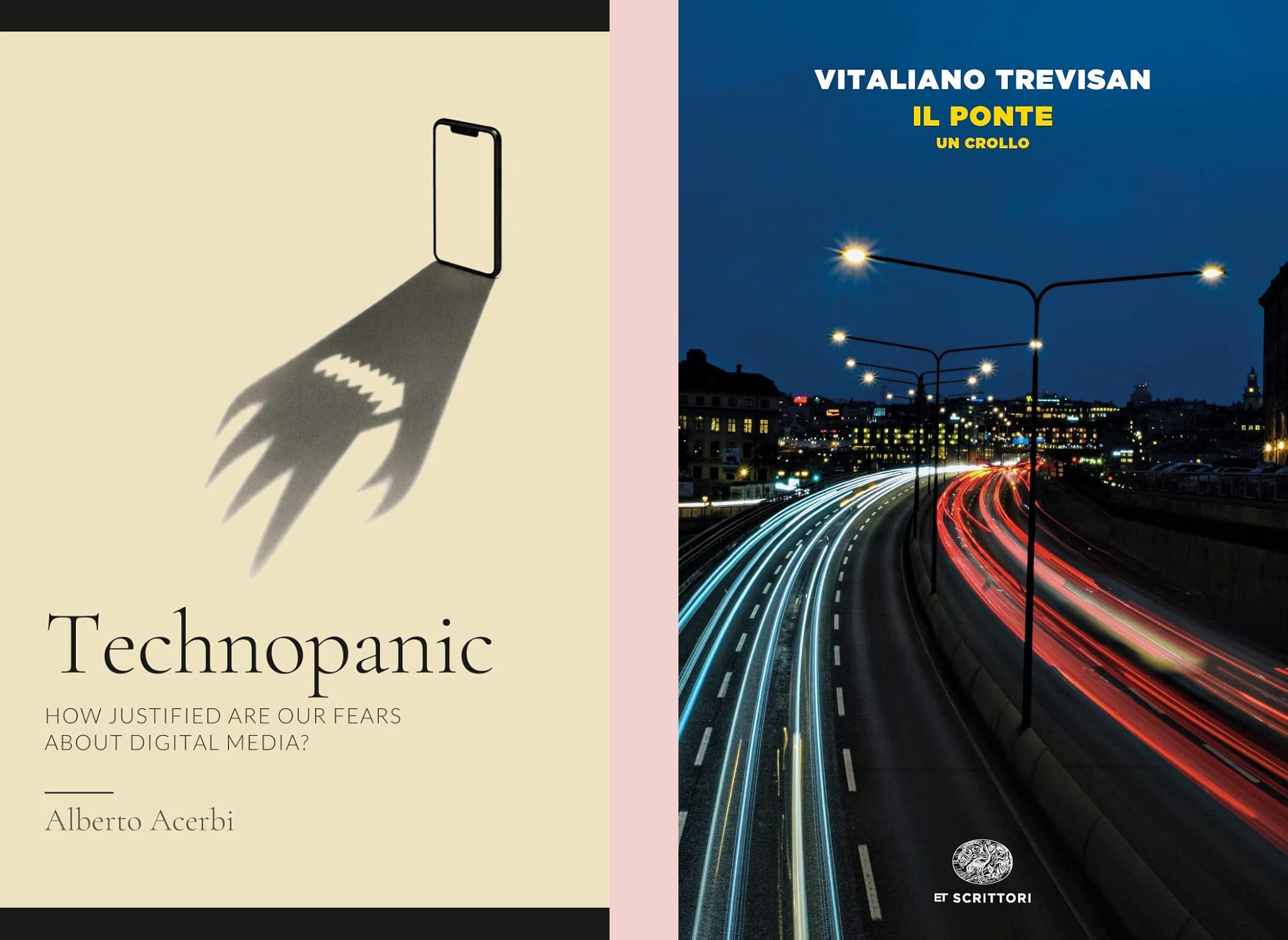
More recently I extended this line of reasoning to various fears related to social media, like algorithmic radicalization, worsening mental health, and polarization. My impression is the research does not give a clear image, and social media provides a convenient scapegoat. I wrote a non-academic book about all that, titled Technopanic.
Funnily enough, now this debate somehow feels old. There is “the” new scare —— AI. It is a bit disconcerting to often see that the same people who were warning against social media have now moved their target. But this is exactly what I describe in the first chapter of Technopanic.
Communication technologies —— writing, printing press, TV, or whatever you choose —— have always been accompanied by fear. That is, until the next one arrives… Of course I am not saying that all technologies are the same. What will happen with AI in ten, or even five, years? But we should be aware that there is a common tendency.
What are you reading, watching, or listening to now?
I moved to Italy three years ago and decided to read fiction in Italian, and possibly by Italian contemporary authors. So I go to an old-fashioned bookstore and I buy the printed stuff.
At the moment I am reading I convitati di pietra (not great) by Michele Mari, which recently won a major Italian literary prize. I guess my advice will not be very useful for the readers of Machine Culture as these books are probably not translated, but if I had to suggest only one recent book that I read and that I really enjoyed it would be Works by Vitaliano Trevisan, a sort of coming-of-age novel in the industrial northeast of Italy, written with a lucid contempt that reminds me of an angry Primo Levi.
Go-to emerging tech music track?
I do not listen to music when I work. And my musical taste is probably on the boring side.
But let me say one thing about the “kids these days” who listen to terrible music. My daughter, who is almost 11, made me discover phonk music, which is a mix of trap, Brazilian music, and electro. The songs she listens to are generally around one minute long and somehow link a manga or anime aesthetic to all that. I genuinely like it, and, if I were cooler, I would listen to more of it!
This interview has been edited for length and clarity with hyperlinks added for deeper exploration.